“Audited” is one of the most common words on a DeFi protocol’s homepage. It sits next to a logo from a security firm and is meant to say, you can trust this.
It’s a good sign, but it isn’t a guarantee. Understanding what an audit covers, and what it leaves out, helps you judge a protocol’s real risk instead of relying on a badge.
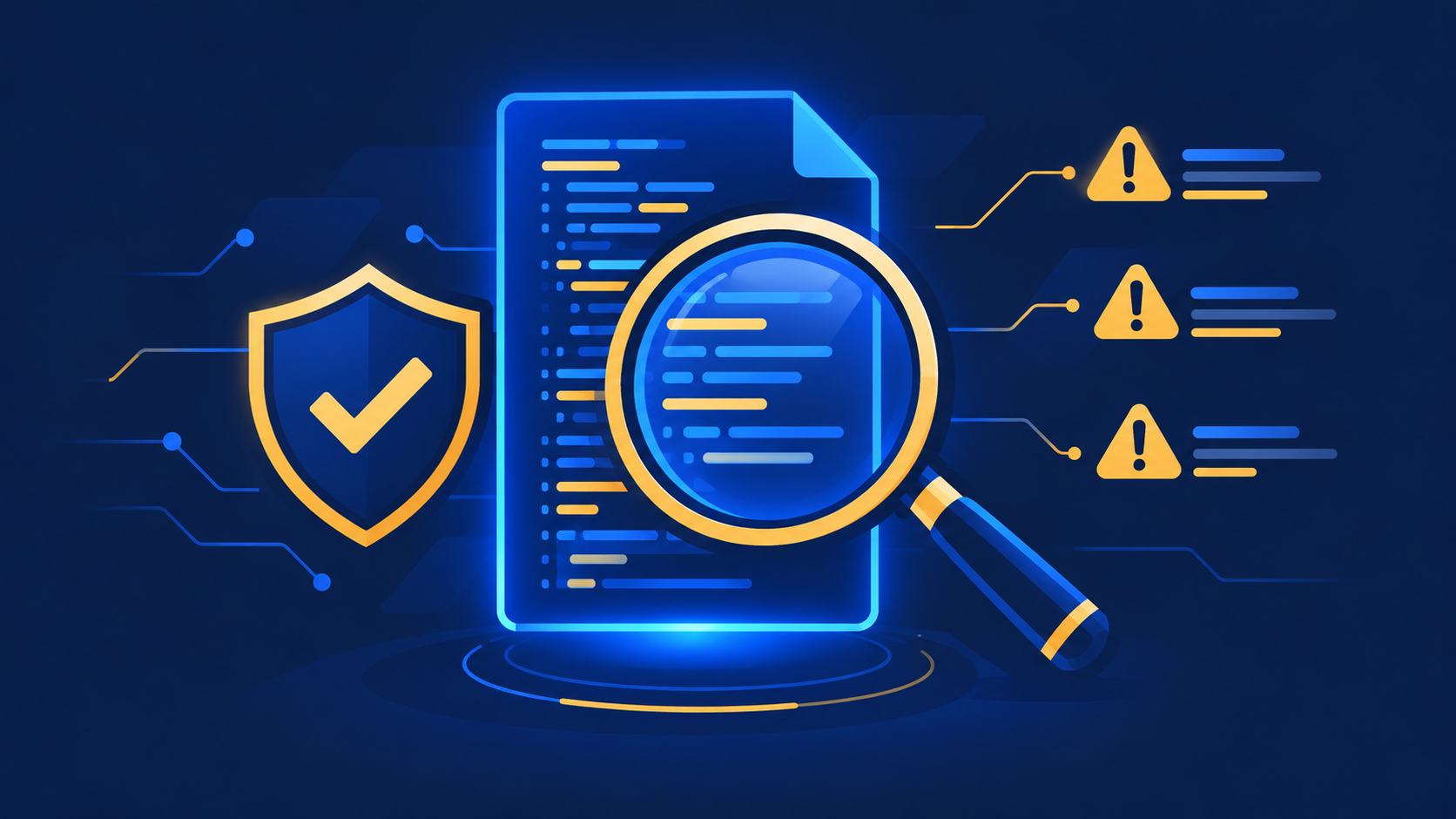
A smart contract audit is an independent review of a protocol’s code by a security firm. Auditors read the contracts line by line, run automated analysis tools, test unusual scenarios, and look for bugs, logic errors, and ways the code could be exploited.
At the end, the firm publishes a report. It lists each issue found, rates it by severity (usually critical, high, medium, low, or informational), and records whether the team fixed it.
Audits matter because smart contracts are difficult to change once deployed, and they often hold millions of dollars. A bug found before launch is a code fix. A bug found after launch can be an exploit.
It catches known vulnerability patterns. Experienced auditors have seen the common mistakes many times, such as reentrancy bugs, broken access controls, and faulty math. A good review finds most of these before launch.
It forces the team to document its design. Writing down how the system is supposed to work often exposes flaws in the logic itself.
It adds a second set of eyes. Developers get used to their own code, and a fresh reviewer notices what they no longer see.
It creates a public record. The report shows which issues were found and whether the team took them seriously.
This is the part most people miss.
An audit is a snapshot, not a certificate. It covers one version of the code at one point in time. If the team upgrades the contracts afterward, the audit may not apply to the new code.
It doesn’t find every bug. Auditors work with limited time and budget, and complex protocols can hide flaws that only appear in rare conditions. Euler Finance, for example, was exploited for roughly $197 million in 2023 despite having been reviewed multiple times.
It doesn’t cover economic design. A contract can be flawless as code and still be built on unsustainable incentives. Some audits include economic review, but many focus only on code.
It doesn’t assess the team. An audit says nothing about whether the developers are honest or how they would respond to a crisis.
It doesn’t cover everything the protocol depends on. Price feeds, bridges, and other protocols the system connects to may sit outside the audit’s scope.
It doesn’t predict market stress. Extreme volatility or sudden liquidity shortages can push a well-written protocol into situations nobody tested.
You don’t need to be a developer to get real value from a report. Check these five things.
1. Who did the audit? Established firms include Trail of Bits, OpenZeppelin, Consensys Diligence, and CertiK. An audit from an unknown firm, or one the project paid for with no public track record behind it, deserves a closer look.
2. When was it done? A report from two years ago on code that has been rewritten since tells you little. Compare the audit date with the protocol’s latest upgrades.
3. What was in scope? The report lists which contracts were reviewed. If the contracts that hold your funds aren’t on the list, the audit doesn’t cover your risk.
4. How were the findings resolved? Look for critical and high-severity issues marked as fixed. An unresolved critical issue is a serious warning sign.
5. Are there multiple audits? Several reviews by different firms, plus an active bug bounty program, give far stronger assurance than a single report.
An audit works best as one layer among several.
A bug bounty pays independent researchers to find and responsibly report vulnerabilities after launch. It keeps the code under review long after the audit is finished.
Time in market matters too. A protocol that has held large deposits through several market cycles without an exploit has passed a test no audit can fully simulate. An audited protocol launched last month is a different risk from one that has run safely for years.
When you evaluate a protocol, look for all three: multiple audits, an active bounty program, and a long operating history. The more of these it has, the more confidence you can reasonably place in it.
If any of these answers is unclear, treat that as information. You can wait, deposit less, or walk away.
An audit tells you that qualified people reviewed the code and that known problems were addressed. It does not tell you the protocol is safe, the economics are sound, or the team is trustworthy.
Treat “audited” as a starting point. Read the report, check the scope and date, and look for layers of protection beyond the audit. That habit does more to protect your capital than any badge on a homepage.
If you’d like help building an approach to DeFi that fits your goals and risk tolerance, Book a Call with the DeFi Path team or grab the Free Playbook to get started.
Disclaimer: Educational content only — not investment, financial, tax, or legal advice. Cryptocurrency and DeFi involve substantial risk, including the potential for total loss of capital. See our full Terms & Conditions and Privacy Policy.