
Every serious DeFi project publishes a white paper. It's the foundational document that explains what the protocol does, how it works, why it exists, and how its token economy is structured. For anyone evaluating whether a protocol is worth trusting with real capital, the white paper is the primary source of truth.
The problem is that most white papers are dense, technical, and written by people who understand the subject far better than the audience they're writing for. Most readers skim the introduction, look at the tokenomics section, and move on — which means they miss most of what the document actually reveals about the protocol's legitimacy, design quality, and risk profile.
This guide teaches you how to read a DeFi white paper properly — what to look for, what to skip, what red flags to watch for, and how to extract the information that actually matters for your due diligence.
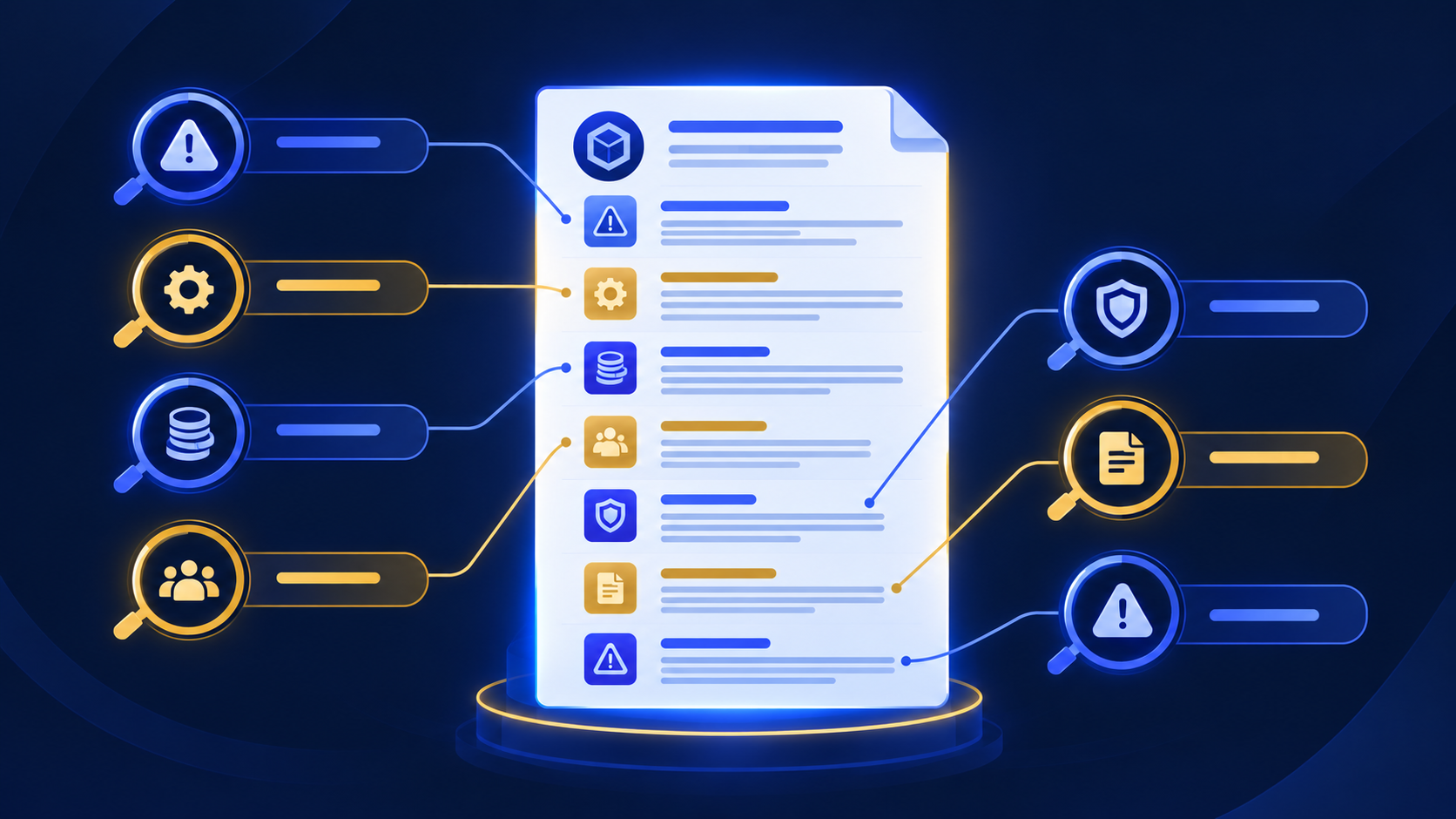
A white paper isn’t marketing material. It’s a technical specification — a detailed description of what a protocol is designed to do and how it’s designed to do it. Well-written white papers explain the problem being solved, the mechanism used to solve it, the economic incentives that make the system work, and the risks inherent in the design.
Reading a white paper carefully does several things that no amount of Twitter research or Discord conversation can replicate. It tells you whether the team understands the problem they’re solving. It reveals whether the tokenomics are sustainable or designed to enrich insiders at the expense of later participants. It shows whether the protocol’s security model has been thought through. And it often reveals red flags that are invisible on the surface but obvious once you know what you’re looking for.
Not every protocol publishes a traditional white paper — some publish technical documentation, litepaper summaries, or on-chain governance constitutions instead. The reading framework below applies to any of these formats.
Every white paper opens with an abstract or executive summary — a condensed version of what the protocol does and why it exists. Read it first to orient yourself, but don’t use it as a substitute for reading further.
The abstract tells you what the team wants you to believe about their protocol. The rest of the document tells you whether that belief is justified.
What to look for in the abstract:
Is the problem statement clear and specific? A protocol solving a vague problem — “making DeFi better” or “revolutionizing finance” — is making a marketing claim, not a technical argument. A protocol solving a specific, demonstrable problem — “stablecoin swaps incur excessive slippage on standard AMMs due to the constant product formula’s behavior near equivalent prices” — is describing something real that the rest of the document can address.
Is the proposed solution explained at the conceptual level? You should be able to understand the core mechanism from the abstract without needing to read the entire paper. If the abstract is impenetrably vague about how the protocol actually works, that’s worth noting.
The most important question in any white paper is whether the problem being solved is real — and whether the proposed solution is meaningfully better than existing alternatives.
DeFi has produced genuine innovations that addressed real problems: Uniswap’s AMM solved the liquidity fragmentation problem of on-chain order books. Aave’s flash loans created an entirely new financial instrument. MakerDAO’s overcollateralized stablecoin model created decentralized dollar-pegged liquidity. Each of these started with a specific, real problem and designed a mechanism specifically to solve it.
Many protocols, by contrast, describe problems that don’t really exist, propose solutions that don’t meaningfully improve on what already exists, or frame existing solutions as if they were novel inventions.
What to look for:
Does the paper acknowledge existing solutions and explain why they’re insufficient? Any credible protocol understands the competitive landscape and articulates specifically why existing approaches fall short. Ignoring competitors entirely — or dismissing them without substantive analysis — is a yellow flag.
Is the problem quantified? Real problems have measurable magnitude. “Liquidity pools suffer from impermanent loss” is more credible when followed by data showing how much IL costs LPs under specific conditions than when stated as a general observation with no supporting evidence.
This is the technical heart of the white paper — and the section most readers skip because it’s the hardest to follow. Don’t skip it. You don’t need to understand every mathematical detail, but you should be able to grasp the core mechanism at a conceptual level.
Questions to answer from this section:
What does the protocol actually do, step by step? Walk through the primary user interaction in your head. If you’re depositing collateral to borrow against it, what happens to that collateral? Who manages it? Under what conditions does it get liquidated? What smart contract enforces those rules?
What makes this mechanism secure? How does the protocol prevent bad actors from exploiting it? What happens in edge cases — extreme price volatility, liquidity crises, oracle failures? A credible protocol addresses these scenarios explicitly. One that ignores them either hasn’t thought them through or doesn’t want you to.
Does the mechanism make economic sense? The core mechanism should create aligned incentives where participants are rewarded for behaviors that benefit the protocol and penalized for behaviors that harm it. If the mechanism creates obvious ways to extract value at other participants’ expense, that’s a significant design flaw.
This is the section where the most critical due diligence happens — and where the most red flags appear. Tokenomics describes how the protocol’s token is distributed, how it’s used within the system, and what economic incentives it creates.
Token distribution — the most important number
Look for the allocation table showing what percentage of the total token supply goes to different stakeholders: team, investors, community, ecosystem development, treasury. This tells you immediately who benefits if the token price rises.
A healthy distribution concentrates meaningful supply in the community and ecosystem rather than with insiders. A suspicious distribution gives 30–50% or more to the team and early investors — often with vesting schedules that sound long (three or four years) but allow significant early selling.
What to watch for:
Token utility — where the yield actually comes from
Every token that offers yield has to get that yield from somewhere. Identify specifically where the protocol’s revenue comes from and whether the token’s economics are sustainable.
Sustainable yield sources: trading fees shared with token holders, protocol revenue from borrowing interest, fee rebates funded by genuine protocol activity.
Unsustainable yield sources: new token emissions paid to early depositors that dilute all token holders, Ponzi-like structures where early participants are paid by later participants, yields that depend on continuous new capital inflows to maintain.
The question isn’t whether the current yield is high — it’s whether the mechanism generating that yield can continue operating when speculative momentum fades.
Inflation schedule
How many new tokens are created over time and on what schedule? A protocol that emits large quantities of new tokens to fund yield farming rewards is inflating its supply — and if token price doesn’t rise proportionally, the real purchasing power of those rewards is eroding. Always look at the emission schedule in relation to the circulating supply growth to understand the dilution picture.
Most white papers include a section on the team. What’s there — and what isn’t — matters.
What a credible team section includes:
Named individuals with verifiable professional histories. Not just names and titles, but backgrounds that can be cross-referenced — prior projects, academic credentials, public speaking, GitHub contributions. People who have built things before and are willing to attach their reputation to this project.
Relevant expertise. A DeFi lending protocol built by a team with no background in finance or smart contract security is a different risk profile than one built by people with demonstrable experience in both.
What raises concern:
Completely anonymous teams with no track record. As noted in our Due Diligence guide, anonymity isn’t automatically disqualifying — some of DeFi’s most important protocols were built pseudonymously. But anonymity combined with a new project and aggressive tokenomics is a risk combination worth taking seriously.
Advisors listed prominently but team members barely mentioned. Advisor sections padded with well-known names are a common signal that the team is using borrowed credibility to compensate for their own limited track record.
Many white papers include a risk disclosure section — and it’s one of the most useful parts of the document because it tells you what the team themselves consider the main vulnerabilities in their system.
A team that writes a thorough, honest risk section is demonstrating intellectual honesty. A team that glosses over risks with generic disclaimers is either not thinking carefully about failure modes or not being transparent about them.
What a good risk section covers:
Smart contract risk — the possibility of bugs or vulnerabilities in the protocol’s code and what mitigations are in place (audits, bug bounties, insurance).
Oracle risk — how the protocol uses external price feeds and what happens if those feeds are manipulated or fail.
Collateral risk — for lending protocols, what happens if supported collateral assets experience extreme volatility or liquidity crises.
Governance risk — how the protocol’s governance model could be exploited or captured by bad actors.
Regulatory risk — honest acknowledgment of legal uncertainty and how the protocol is designed to navigate it.
This is a quick check but a revealing one. Credible white papers cite their sources — academic research, prior DeFi protocols, economic models, security analyses. The reference section tells you whether the team has done genuine intellectual work or written something that sounds technical without the substance.
A white paper with no citations or references — especially one making novel technical or economic claims — is a yellow flag. It suggests either that the claims aren’t grounded in prior work or that the team hasn’t engaged with the existing literature in their area.
After reading dozens of white papers, these patterns consistently signal trouble:
Vague problem statements that describe general inefficiencies without specific, measurable magnitude — suggesting the problem may not be real or significant enough to justify a new protocol.
Revolutionary claims without precedent — any white paper claiming to have solved a problem that has stumped the entire DeFi ecosystem without clearly explaining the novel mechanism should be read with extreme skepticism.
Tokenomics designed for insiders — high team and investor allocations, short vesting periods, large discretionary treasury with no governance, and yields funded primarily by new token emissions rather than protocol revenue.
No audit information — a protocol describing complex smart contract mechanics but not mentioning security audits hasn’t addressed the most fundamental security concern in DeFi.
Anonymous team with no track record — especially in combination with aggressive tokenomics and short operating history.
Missing risk section — the absence of honest risk disclosure suggests either shallow thinking about failure modes or deliberate concealment of known vulnerabilities.
Extraordinary yield promises — any white paper promising dramatically above-market yields with vague explanations of their source should be treated as a significant red flag regardless of how compelling the rest of the document seems.
When you open a white paper, work through these questions in order:
You won’t get perfect answers to all seven questions from every white paper. But working through them systematically will tell you more about a protocol’s legitimacy and risk profile than any amount of social media research — and it will occasionally save you from a position that looked compelling on the surface but had fundamental problems visible in the document.
White papers are primary sources — the most direct window into how a protocol’s creators think about what they’re building. Reading them carefully is one of the highest-leverage skills in DeFi due diligence.
You don’t need to understand every mathematical derivation or cryptographic proof. You need to understand the problem, the mechanism, the tokenomics, and the risks — and whether what you read inspires confidence or raises concerns.
The protocols worth trusting are built by teams confident enough in their work to explain it clearly, honest enough to acknowledge its risks, and thoughtful enough to design tokenomics that align everyone’s incentives toward long-term success rather than short-term extraction.
White papers are where you find out which category any given protocol falls into.
Disclaimer: Educational content only — not investment, financial, tax, or legal advice. Cryptocurrency and DeFi involve substantial risk, including the potential for total loss of capital. See our full Terms & Conditions and Privacy Policy.